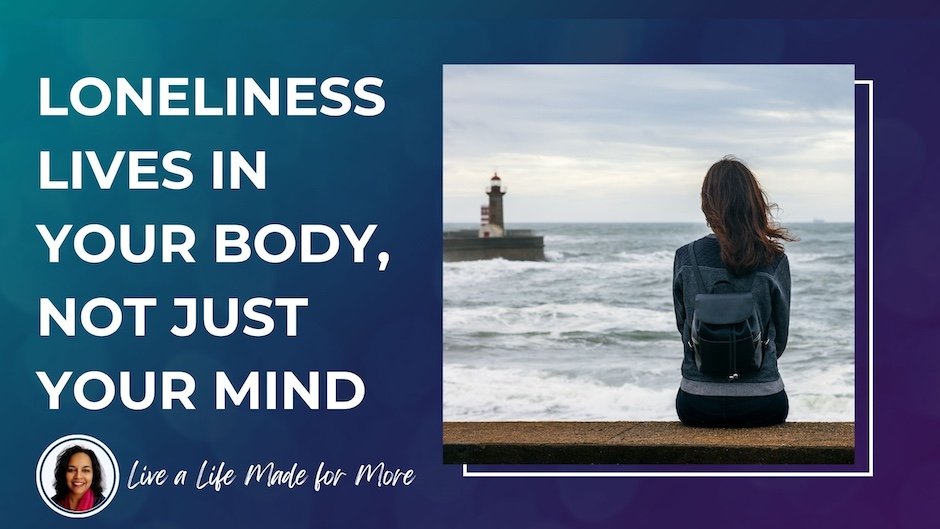
I want to spend some time on the nervous system, because I think it’s the missing piece in almost every conversation about loneliness. Most people hear the word loneliness and think: emotion. Sadness. Neediness. A bad Sunday night. Something you feel, not something that happens to your body.
But loneliness is a state of the body.
It’s not just I wish I had plans. At its deepest, it becomes: I do not feel held. I do not feel seen. I am carrying too much alone. I need to stay alert because there’s no one close enough to help me.
And when the body gets that message repeatedly, it adapts.
The Three Modes Your Nervous System Moves Through
Borrowing from polyvagal theory, your nervous system moves through a few broad states, and understanding them changes how you see your own behavior.
The first is the safe and socially engaged state. This is when you feel present, connected, and able to actually be with people. You can make eye contact without feeling exposed. You can receive affection. You think clearly. You’re curious instead of defensive. You can have a hard conversation without immediately treating it like a threat. This state is deeply linked to felt safety — it’s where you feel most like yourself.
The second is fight or flight. This is when your body mobilizes. You might feel anxious, reactive, stressed, irritable, always on. Emails feel sharper. Texts feel loaded. Silence feels personal. Everything lands heavier, more charged, because your system is in protection mode.
The third is shutdown. This one can be harder to recognize because it doesn’t look like panic — it looks like flatness. Fatigue. Numbness. Endless scrolling without really enjoying any of it. Not answering anyone. Wanting connection but having absolutely no energy to pursue it.
Here’s the reframe I want you to sit with: a lot of what we call being antisocial may actually be a nervous system that’s been undersupported for too long. A lot of what we call laziness may be depletion. I’m bad at keeping in touch might really be overwhelm wrapped in shame. I just like being alone might be true — but it might also be a protective adaptation that developed over years, not an honest preference.
Solitude and Isolation Are Not the Same Thing
Solitude is chosen. Isolation often starts to feel like a trap.
Solitude restores you. It helps you hear yourself, access your intuition, find your thoughts, get quiet enough to feel inspired. Isolation can shrink you. It can make your thoughts feel louder and less kind.
Healthy alone time is genuinely beautiful.
You need quiet. You need space. You need moments when nobody needs anything from you.
But if your alone time is consistently leaving you feeling more guarded, more numb, more agitated, or more disconnected — that’s worth paying attention to. It might be a pattern rather than a preference.
What Safe Connection Actually Does
Here’s where the conversation turns toward something hopeful.
Safe connection gives your nervous system cues that it’s okay to relax. A warm voice. A familiar face. A calm presence. A hug. Someone listening without trying to fix you in the first ten seconds. These things tell your body: we are not in danger right now. We are somewhere safe.
When your body receives enough of those cues over time, something shifts. Your recovery gets faster. You soften sooner. You don’t have to stay braced all day. The right person doesn’t magically solve your life — they help your system remember its own safety. That’s the medicine.
Which is also why the quality of who you’re around matters so much. Being around the wrong people can dysregulate you just as powerfully as good connection can settle you. You know the difference already — there are people you leave feeling calm, clear, and steady, and there are people who leave you feeling like you just ran a marathon you didn’t sign up for.
So when I say we need connection, I don’t mean we need access to everyone, or that we should tolerate relationships that drain, diminish, or exhaust us. I mean we need safe, mutual, nourishing connection — the kind where you don’t have to audition.
Where silence isn’t a threat. Where you can be honest without feeling punished for it. Where your nervous system quietly says: I can breathe here.
The Dose Is Smaller Than You Think
Here’s the good news, and it really is good: you don’t need to become a social butterfly. You don’t need forty close friends. You don’t need to host a dinner party and go around the room sharing deep intentions with everyone you know. (If that’s genuinely you — wonderful, keep doing it.) For the rest of us, the bar is much lower.
What actually matters is quality and consistency. A few people who genuinely know you. A few regular moments of contact. A few places where your absence would be noticed. That is enough. That is actually a lot.
A meaningful life isn’t built from dramatic breakthroughs. It’s built from belonging. The same friend on the same walk. The neighbor you actually stop and talk to. The cousin who checks in. The person you can call without having to be your polished, edited self.
Most real connection is ordinary. It’s sending someone a photo of something that made you laugh because you thought they’d appreciate it. It’s asking how did that thing go? — and remembering what the thing was. It’s knowing the name of someone’s kid. Sitting next to each other without needing to be impressive.
Your nervous system doesn’t need every moment to be profound. It needs enough repeated evidence that you are not alone. That evidence compounds — those small moments weave into a web, and that web matters, because eventually life gets heavy. Not because you did anything wrong, but because that’s just how life works. And when it does, you won’t rise to the level of some perfect emergency plan. You will fall into the relationships you’ve been tending.
So tend them now.
Seven Things You Can Do This Week
Just one or two of these, done with intention, is enough to start shifting things.
- Send the text you’ve been avoiding. You know the one. Someone’s been on your mind and you haven’t reached out. Send it anyway. Maybe they respond, maybe they don’t. It still counts.
- Have one phone-free conversation. Not face-down on the table — actually in another room. Be with someone fully for one conversation this week. See what it feels like.
- Build one tiny ritual of contact. A Monday voice note. A Friday coffee. A Sunday walk. Consistency is the point, not grand gesture.
- Turn a transaction into a human moment. Look up. Smile at someone. Say good morning. Ask how someone’s day is going. Small, real, human. It matters more than it looks.
- Notice who regulates you. Who do you feel more like yourself around? Who do you feel calmer near? That’s your body giving you information. Listen to it.
- Treat the urge to cancel as data. Before you cancel, check in honestly — is this genuine need for rest, or is it avoidance? You don’t always have to override the urge. But at least ask the question.
- Let people know you a little better. This is probably the hardest one. A lot of us have learned to be around people without ever quite letting them in. Try giving a little more. Instead of I’m tired, try I’ve been feeling a little disconnected lately. Not with everyone — with the people you actually want to be closer to. Relationships don’t deepen because someone says the perfect thing. They deepen because someone decides to be a little more honest.
Where This All Lands
We are living in a strange moment. More connected than any humans in history — and yet so many people feel unknown, unseen, alone. We can reach anyone in seconds and hesitate to send a text. We can watch thousands of people live their lives and struggle to make plans for our own.
The nourishment we actually need isn’t complicated. Don’t try to fix your entire social life this week. Just do one human thing: send the card, make the call, keep the plan, ask the real question, put your phone in another room. One honest conversation. One walk. One hand on the shoulder. It tells someone — you’re not alone here.
And neither are you.